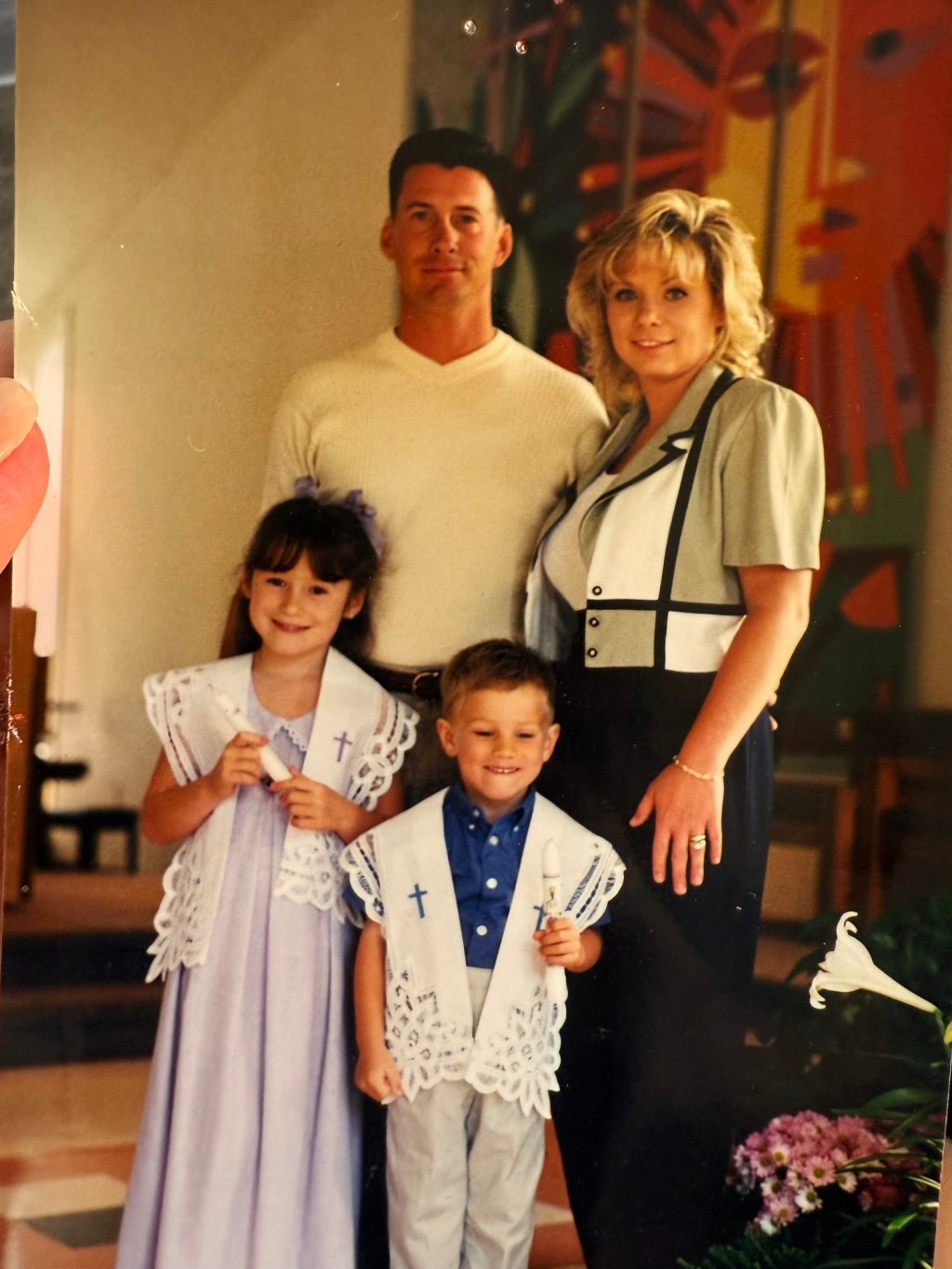
When I was around twelve years old, I thought my parents were the coolest people alive. In my eyes, they were the couple everyone wanted to be. They walked into a room like they owned it. They laughed loud. They dressed well. They were magnetic.
My mom was breathtaking. She always smelled good, always had her hair done, and carried this graceful softness that made people love her instantly. But behind that beauty was a woman who grew up raising half of her siblings, carrying pain she never got to heal from. Her smile was real, but her mind was tired and bruised.
My dad was the one people talked about.
A model once.
A professional kickboxer.
A bouncer.
A superintendent.
He was “The Man,” and image meant everything to him. To both of them. We even had our own tanning bed because keeping up appearances was a lifestyle.
For a long time, life looked perfect on the outside.
We went from a normal family home to a twelve-thousand square foot house they built from scratch. People called it a mansion. My mom called it her dream. My brother and I didn’t understand much about money or status — we just knew our house was big, and that made friendships confusing. When you’re twelve, you can’t tell who wants to be your friend or who wants to be inside your house.
I was nerdy. Quiet.
Not the popular kid.
But the few friends I did have felt like my little world.
My parents were the show-out type.
Big parties.
Big birthdays.
Big gestures.
My mom was the PTO mom every parent knew. She practically lived at my brother’s school because he struggled with learning, and she wanted to protect him from everything she couldn’t understand herself. My brother has mental problems that would never be diagnosed more than ADHD.
My parents were strict. And in our house, discipline meant the belt.
At that age, I didn’t label it abuse.
It was just “what happened” when you messed up.
But looking back now, knowing what I know, I would never raise my children that way. I want to give grace and say there’s not a manual to parenting and I don’t have kids yet so how could I judge or give my advice, but deep down I know. I know I wouldn’t or couldn’t do that
Everything shifted around 2006.
The year the market crashed along with my family.
The year my parents started dipping into party drugs with their friends.
The year the fun energy took a darker turn.
My mom lost a lot of weight.
Her fibromyalgia flared.
Her neck pain got worse.
My dad was constantly working and constantly angry.
The laughter in the house slowly disappeared, replaced with tension that sat in every room like humidity.
This is the year my childhood cracked open.
My mom had a dark side most people never saw. She would get worked up, point the finger at us, and say the sentence that made my stomach drop every time:
“Wait until your father gets home.”
We would cry and beg. Because by then, the belt wasn’t just “discipline.”
It was bare skin.
It was pain.
It was screaming.
It was the kind of punishment that left welts as normal and bruises as new.
I showed my mom bruises once.
She barely reacted.
So I never showed anyone again.
Even small accidents became disasters.
One day, my mom was cleaning for a party. I tried to help by making red jello. When I went to put it in the fridge, I tripped. It spilled everywhere.
My dad broke a broom over my back.
My mom used my dad like a weapon.
As a threat.
As the punishment she didn’t want to deal with.
This was also the year the violence between them started.
One night, I was lying in bed when their voices exploded downstairs. Screaming. Slamming. The kind of argument you think will end but never does. Then my mom screamed my name.
I ran downstairs, and the picture burned into my memory forever:
My parents on the floor.
A butcher knife between them.
Both of them fighting for control.
I was screaming, my brother came running and was screaming.
I grabbed the phone.
I called 911.
If I could hear that call today, I think it would break me.
We lived far from town, so it took around fifteen minutes for the police to show up. By the time they arrived, my parents had cleaned themselves up enough to calm their voices, sit upright, and pretend it was “just an argument.”
They coached me and my brother to say the same.
And we did.
We were children.
Scared.
Conditioned.
Trying to survive another day.
The police left.
Nothing changed.
No one helped.
My outlet was my Nana and I started telling her every time it happened and my parents would eventually take her away and not let us talk to her for YEARS
But I knew something inside me shifted that night.
This was the beginning of a new version of my life — darker, heavier, and lonelier.
The beginning of watching two people who once owned every room slowly lose everything, piece by piece.
The beginning of the end of the childhood I once loved.
And I had no idea how much worse it would get.
 From Broken to Boss: Becoming Me
Leave a comment